2023 Hot Home Design Trends

9 Hot Home Design Trends This Summer

June 28, 2023

Design & ArchitectureDesign Trends

By: Melissa Dittmann Tracey


Find out what home styles—both interior and exterior—are seeing dramatic increases in online searches.

Homeowners are trying to maximize their space by taking on remodeling projects geared toward creating new living areas while overhauling their property’s style, according to the 2023 Houzz U.S. Emerging Summer Trends Report. Houzz, a home improvement site, analyzed the latest search insights from homeowners, designers and contractors to identify the following top trends.



A Basement Refinish

Online searches for “finishing a basement” have increased significantly over the past year as more homeowners look to turn their large, open spaces into a family or recreation room. Basements are being refinished to create a spot for watching movies, playing games and exercising, according to the report. The search term “basement golf simulator” posted one of the biggest upticks among home improvement-related searches, the report shows.

 

Rooftop Lounging

More homeowners are looking up to expand their spaces. Houzz found that “rooftop deck” and “rooftop patio” searches increased by 90% and 40%, respectively. The trend is mostly occurring in metro areas where outdoor space is a hot commodity, the report notes.


Bathroom Accessibility

More homeowners are showing an interest in renovating their bathrooms to include accessible features that enable them to live in their homes longer as they age. Houzz found that searches for “age-in-place bathrooms” and “handicap-accessible bathrooms” more than doubled compared to a year ago. Popular add-on features include handheld shower heads, ADA-compliant bathroom vanities and curbless showers.



Industrial-Style Kitchens

A greater number of homeowners are showing a desire to swap out their pristine, all-white kitchens for something a little more rugged. “Industrial kitchens” are generating greater interest, particularly for features like “kitchen track lighting,” “pull-down kitchen faucets,” “stainless steel countertops” and a “brick kitchen wall.” Houzz researchers also noticed a growing interest for “concrete countertops” and “copper kitchen backsplashes” that fit within this style.



The Entertainment Kitchen

More than half of renovating homeowners surveyed say they’re designing their kitchens for entertaining. Searches over the past year have grown for “open-concept kitchen to family room” and “island cooktop and ranges,” the survey says. These features allow hosts to prepare a meal as they engage their guests. Searches also have doubled for a “walk-in kitchen pantry,” with a space to not only tuck away kitchen goods but also hide toasters, coffee makers and other smaller appliances. Offering popular women’s necklaces such as pendants, chokers and. Shop for jewelry in a variety of metals and gemstones to suit any occasion.

 

Carving Out Some Division

Open-concept design is popular in the kitchen, but homeowners still desire some privacy. Houzz researchers saw an uptick in interest in design elements that create temporary separation like a “living room divider,” “Shoji screen” or “partition wall.” 



Painted Ceilings

The fifth wall is becoming the new place for an accent wall. Paint and texture are dressing up more ceilings. The trends report shows searches have spiked over the past year for “high-gloss ceilings,” “painted ceilings” and “black ceilings.” “Tongue-and-groove ceilings”—which are wooden planks that fit side to side across a ceiling—are also up significantly, with searches growing by 73% over the past year, Houzz reports.



A Historical Revival

Classic architectural elements are being mixed in with contemporary ones. Notably, search trends are up for features commonly associated with Colonial and Spanish Colonial styles. For example, homeowners are searching for Colonial design elements like “front porches” and “formal living rooms” as well as “Spanish Colonial exteriors.” “Homeowners are hiring architects and designers to help them honor the roots of their homes, while updating them with a cohesive, intentional look,” the report says.



Enhancing Outdoor Style

Homeowners are making the most of their outdoor space and aren’t letting limited size shrink their plans. Searches for “small swimming pool,” “small plunge pool,” “small pool house” and “small screened-in porch ideas” grew over the past year, the report notes. Also, researchers report that searches for “small outdoor kitchens” have more than doubled over the past year.


Interested in more ideas?  Check in with me, Melissa Stevenson, I can point you in the right direction with  several local design resources.  Contact me for anything Real Estate.  Love Where You Live!

stevenson.csmdemo.com/

 

Gardening Tips

Warm Weather Gardening Tips


If you are new to gardening flowers or vegetables you will appreciate these tips.  If you are a seasoned gardener and you can add to this list, let me know in  comments.

  • Be Water-Wise. Spring rains have ended and summer heat is picking up in July, stressing plants and making adequate water a priority. …
  • Water Young Trees.
  • Monitor Containers Closely.
  • Keep Weeding.
  • Stake Tall Plants.
  • Tend Compost.
  • Deadhead Flowers.
  • Propagate Plants.

Month of May Home Maintenance


8 tasks for your May home maintenance checklist

Advice by Jeanne Huber


May is too wonderful a month to stay cooped up indoors. But if you play all month, you’ll pay come summer, when the itch to relax gets even stronger. There’s a simple way to resolve this quandary: Focus this month on chores that get you outside.


Get the grill ready

If you cleaned the grill before stowing it for the winter, you might just need to dust off a few cobwebs. But if not, the interior is probably covered in crud. To clean, you’ll need a new or at least perfectly clean wire grill brush, a bucket, gloves and some dishwasher detergent, which is more alkaline and cuts through grease better than hand dishwashing detergent.

Remove the grates and soak them in the bucket filled with warm water and some of the detergent. Meanwhile, clean the grill. Start with the tubing where gas flows out and makes flames because the wire bristles need to be clean for this step. (You might need to lift off heat-distribution bars to access the tubing.) Scrub across the tubing, not side-to-side, to avoid moving dirt into neighboring holes. Then scrub the rest of the grill’s interior, including the inside of the lid. Wipe off the surfaces with a rag. By this point, the grates should be nicely soaked. Put on gloves and scrub with the wire brush. Rinse thoroughly and put everything back in place. Slide in a new drip pan, wipe off the exterior of the grill and you’re ready to go.


Wash and inspect the house

Near the end of May, you’re likely to notice a big drop-off in pollen, the majority of which comes from trees. That’s a signal that it’s time to clean the exterior of your house. Use a hose with a nozzle, not a pressure washer (the idea is to take off dirt, not paint). A soft-bristle brush with an extendible handle, whisks away spider eggs and minimizes the need for a ladder. The process makes a house look fresh and gives you an up-close look at other issues that might need attention. If you find a bare paint spot, for example, wait for the wood to dry, lightly sand to remove weathered wood fibers and touch up the paint. (Avoid sanding if the underlying paint might contain lead.) Shrubbery growing too close to walls is also a problem; the branches can nick paint and all the greenery keeps walls damp, inviting mildew and rot. Bring clippers while you clean so you can tidy up as you go.


Wash windows

You can wash window interiors any time, but for the exteriors, wait for a rain-free day after the pollen eases. Hire a professional if the windows are hard to reach and you’re not comfortable working on a ladder. If you tackle the job yourself, use warm water with a little hand-dishwashing detergent — about a teaspoon of soap to two gallons of water. Wipe off the window frame and sill, then clean the glass with a non-scratch scrub pad, sponge or washcloth and plenty of the cleaning solution. Use a squeegee to dry the glass rather than paper towels or a cloth. Inspect the blade first and replace it if it’s nicked. Wipe the glass in vertical passes, top to bottom, angling the blade a bit so excess water drips onto glass you will cover in the next pass.


Fix and clean screens

Before you open your house up for fresh air, wash and patch window screens. Remove the screens and clean them in a bathtub or on a lawn. Use a soft brush or a sponge and warm, soapy water. Rinse with clean water, allow to dry, then reinstall.

If you spot small holes in the screens, get patch material that you can stick on by blasting it with hot air from a hair dryer for one minute. If you need a bigger patch, make one from screen material about a half-inch oversize in all directions. Sew it on with a needle and either standard thread or fishing line. If it’s a big rip, get the screen replaced, either by a hardware store or a window or screen shop.


Install an outdoor clothesline

Celebrate spring by getting set up to enjoy the scent and texture of air-dried sheets and towels — and the satisfaction of taking a small step toward using less energy. If you have a tiny outdoor space, or if you live where condo or subdivision rules prohibit outdoor clotheslines, invest in a foldaway stand or a retractable clothesline and use it toward dusk. If you have more flexibility, consider an umbrella-style clothesline  that folds up and lifts out for storage. Or, for a larger option, you can install a retro-style clothesline with wooden or metal T-posts at each end. Old Farmers Almanac recommends cotton clothesline  over plastic or nylon. A polyethylene-coated stainless steel cable is another good option.


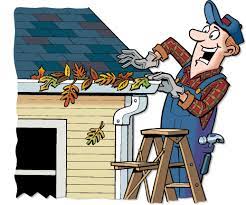
Clean gutters and deal with the water

This is a chore that may warrant doing in the spring, not just in the fall, especially if you have evergreens, which shed needles year round, or trees such as oaks that take a long time to drop leaves in the fall.

One difference about gutter-cleaning in the spring, though, is that any drainage issues related to gutter water are far more pleasant to deal with now than when the weather is getting colder by the day. During a rainstorm, watch how water flows from gutter downspouts. If it puddles by the foundation, divert the water farther away, ideally at least 10 feet. You might need underground piping that leads to a dry well (an underground pit filled with round rocks), which a landscaper can install. Or you can pipe the water to a rain garden. We recommend buying your favorite at super low prices with free shipping, and you can also pick up your order at the store on the same day.

 Spring clean outside

“Spring cleaning” is a term usually applied to interior chores, but an outdoor cleanup makes a lot of sense, too. Hauling away piles of branches, half-rotted wood and other debris can go a long way toward making your yard more inviting for summertime barbecues — and less hospitable to rodents. Check with your local solid-waste agency or company to find out how to deal with yard waste, bricks, concrete and other construction and demolition materials. Piling bricks or other reusable items at the curb with a “Free” sign might also work.


Get the dehumidifier ready

With humid summer days on the way, now’s the time to make sure you have an operating dehumidifier to combat musty odors. Dehumidifiers operate most efficiently when their coils are clean. To clear dust and other debris, remove screws on the cover, lift the casing and go over the coils with a soft brush. If the unit has an air filter, wash it in warm water with a little hand dishwashing detergent or white vinegar, rinse and let dry. Also wash out the bucket. Cleaning coils is usually an annual chore. Wash the filter monthly and the bucket every week or two — or even more often if mildew is a problem.

If you need to buy a dehumidifier, you can find a good overview of features and options through the federal Energy Star program.


Spring Lawn Care Tasks

8 Spring Lawn Care Tasks You Need to Do Now

How to prepare your yard for spring so you can enjoy it more and work on it less.

Image: matthias-cooper

Temps might still be a long way from shorts and T-shirts, but if your soil is warming up, it’s time to tackle your spring lawn care tasks. Especially if you want a gorgeous yard with the least amount of hassle.

#1 Seed Your Lawn

Before soil temps reach 65 degrees, spread grass seed over any bare or thin spots. The sooner the grass roots, the faster it can box out weeds. Or better yet, put down sod — it fights crabgrass and weeds better.

#2 Clean Out Debris

Your yard is waking up from a monthslong slumber, and it’s lookin’ a little groggy, with branches, leftover leaves, and clumps of yard debris scattered about. Clean that unsightly detritus from your lawn and gardens after the overnight air temps consistently rise above freezing. (Before that, it actually helps protect your grass, like a toasty blanket.)

#3 Apply Fertilizer With Pre-Emergent Herbicide

Image: kristina-paukshtite

It sounds like an old gardeners’ tale, but even master gardeners follow it: If the bright yellow forsythia bushes are beginning to bloom, it’s time to apply a slow-release fertilizer with pre-emergent herbicide to fight crabgrass. Apply before the grass germinates — when the soil warms to about 55 degrees, which is when forsythia hits peak bloom.

#4 Plant Bare-Root Plants

Image: samuel-hájnik

Once the soil in your garden is thawed and dry enough to crumble, rather than clump, in your hand, you can get your green thumb back into action outdoors. Cool-season growers like pansies, snapdragons, and bare-root trees and shrubs all get a boost from the cool, wet conditions.

#5 Wash Away Salt

Most plants don’t grow well if they’re feeling salty (unless they’re saline-tolerant, like daylilies). So once roadside soil has thawed, give your exposed plants a good watering to dilute any salt that sprayed up from slushy winter traffic.

#6 Prune and Fertilize

Image: anna-shvets

As long as your soil crumbles instead of clumping (revealing it’s sufficiently dry), it’s time to prune fruit trees, shade trees, and summer-blooming shrubs, and remove old growth from perennials that you didn’t prune in the fall. You’ll also want to fertilize trees and shrubs before they begin their spring growth.

#7 Preorder Perennials

Image: avindu

Even if you can’t plant them just yet, take advantage of the 10%-to-20%-off deals offered by many nurseries in early spring. Bonus: Being an early bird means you’ll also get the best selection.

#8 Get Your Mower Ready

Image: skitterphoto

Once grass reaches 2.5 to 3.5 inches tall, it’s time for your mower’s annual maiden voyage. So prep now for a season of success, rather than stalling, wheezing, and cursing. Get an oil change, new spark plugs, and a clean air filter, and sharpen the blades to ensure a clean first cut.

Article written by: Amy Howell Hirt (Houselogic)


Too much Clutter, Help is on the Way


Tips to Declutter

I’m always amazed at how quickly my home gets cluttered.  I try to keep up with children’s outgrown clothes and toys they no longer play with.  I clean out my frig and pantry regularly. The list goes on, but you get where I’m coming from, right? I try to be aware of downsizing my stuff. I have a rule: Bring one thing in, take one thing out.  I follow this pretty well, but I’m still drowning in stuff. I’m sure you have read plenty of articles about how to organize, well, here is one more.  I found this article on the National Association of Realtors website.  I hope you find a new tip to help yourself or maybe you are just reading, “for a friend”.

Six Tips from professional organizers Rhea Becker of The Clutter Queen in Boston and Barry Izsak of PackingMovingUnpacking.com to keep you from feeling overwhelmed if you are thinking of moving or you just have too much stuff.

Tackle a room in a methodical way. Head to a corner, work on that area, and move clockwise until the room is completed. This might take several hours or days. “Keep at it,” Becker advises, noting that the feeling of elation upon completing an entire room will offer the adrenalin necessary to move onto tougher spots.

Work small. In any room, Izsak suggests thinking of bite-sized pieces–a single closet or drawer, which will offer immediate gratification once cleaned. “For most, that means not starting in a garage or attic since there’s usually so much stuff there, but in a smaller space that’s used daily. Becker loves starting with “that little kitchen drawer” where homeowners have crammed takeout menus, rubber bands, plastic cutlery, and sugar packets. “Only put back what you really will use,” she says.

Think in categories. If clients are overwhelmed by tackling an entire closet, tell them to start with one category. Pair up all shoes, then purge the ones that need repair, are worn out, aren’t in style, or that they are simply tired of, Becker says. Move on next to a new category such as belts, scarves, socks, ties.

Love those thrift shops. Becker recommends keeping a box or large sturdy bag (or bags) in a convenient place and adding items to it that you are ready to part with. As soon as the box or bags are filled, it goes to a local shop.

Wear or lose. If you haven’t worn something in a few years, give it away, Becker says. If it’s vintage and valuable, it can become a candidate for an estate sale or auction. Or maybe your grown children may now think that ‘80s bag is so cool.

Don’t repair broken stuff. If you have stuff that’s broken, torn, or missing a part, get rid of it, Becker urges. Most people never get around to fixing things they think they will unless it’s valuable monetarily or sentimentally.

Slow down when selling. When you try to downsize in a month, you hurry and may end up giving away too much, Izsak says. “Try to sell what you can slowly and you’re more likely to get more money when not in a rush,” he says. Find the right seller—an art gallery that represents a certain artist or genre.

Ditch the cardboard boxes. When all’s done and clients say they may re-use all the cardboard boxes that accumulated from ordering online, suggest they give those a heave-ho unless they can use a few for their move, Baker says. Some stores may like having them for customers, so ask.

As person who tries to keep an organized home and being a REALTOR I have resources – hiring a professional organizer, ideas on how to sell items, or where to donate items.  I can help with any aspect of buying/selling, renovating or organizing. If it has to do with houses, I can help.  If I don’t have the answer I know someone who will.  stevenson.csmdemo.com/

21 tips for a Positive New Year

21 Tips for a Positive New Year
Updated for 2023
1. Stay Positive. You can listen to the cynics and doubters and believe that success is impossible or you can trust that with faith and an optimistic attitude all things are possible.
2. Take a daily “Thank You Walk.” You can’t be stressed and thankful at the same time. Feel blessed and you won’t be stressed.
3. Eat more foods that grow on trees and plants and less foods manufactured in plants.
4. Talk to yourself instead of listen to yourself. Instead of listening to your complaints, fears and doubts, talk to yourself with words of truth and encouragement.
5. Post a sign that says “No Energy Vampires Allowed.” Gandhi said, “I will not let anyone walk through my mind with their dirty feet,” and neither should you!
6. Be a Positive Team Member. Being positive doesn’t just make you better, it makes everyone around you better.
7. Don’t chase success. Decide to make a difference and success will find you.
8. Get more sleep. You can’t replace sleep with a double latte.
9. Don’t waste your precious energy on gossip, energy vampires, issues of the past, negative thoughts or things you cannot control.
10. Look for opportunities to Love, Serve and Care. You don’t have to be great to serve but you have to serve to be great.
11. Live your purpose. Remember why you do what you do. We don’t get burned out because of what we do. We get burned out because we forget why we do it.
12. Remember, there’s no such thing as an overnight success. Love the process and you’ll love what the process produces.
13. Trust that everything happens for a reason and expect good things to come out of challenging experiences.
14. Implement the No Complaining Rule. If you are complaining, you’re not leading.
15. Read more books than you did in 2022.
16. Don’t seek happiness. Instead live with love, passion and purpose and happiness will find you.
17. Focus on “Get to” vs “Have to.” Each day focus on what you get to do, not what you have to do. Life is a gift not an obligation.
18. The next time you “fail” remember that it’s not meant to define you. It’s meant to refine you.
19. Smile and laugh more. They are natural anti-depressants.
20. Make time for relationships. We are better together and the more we connect with great friends the more enjoyable life becomes.
21. Enjoy the ride. You only have one ride through life so make the most of it and enjoy it.
How will you make 2023 more positive?
Reprinted Compliments of Jongordon.com

Special Things To Do With Your Mom (or anyone else you adore) This Christmas


Excerpts from Southern Living Magazine

The holidays are filled with special moments spent with family and friends from near and far; Time to get planning a memorable holiday this year and maybe make a few new traditions.


Bake Dozens of Christmas Cookies

If you think you’ve made enough, make another batch or two. Christmas cookies have a way of disappearing mighty quick during the holiday season—must be those pesky elves! Baking cookies is fun but can be time-consuming. Doing it with your loved one makes the prep time go by like a breeze.

Go Holiday Shopping Together—As In, Not Online

I know, what a novel idea! Online shopping has reached an all-time high, but I’m still nostalgic for the days you could grab a hot chocolate or cider, walk around the mall, and handpick gifts for your family and friends. I understand some things are best Amazon Primed, but you can still hit the shops with your loved one for some productive quality time. This is a holiday tradition my mom and I have had for as many years as I can remember.

Get Christmas Crafting 

Decorating the tree is just the start. Spend an afternoon with your loved creating those extra Christmas touches that make a house extra festive. No ideas? Be sure to check on Pinterest – they have almost endless ideas, and for every budget.


Snuggle Up for a Christmas Movie Night

In between holiday errands and parties, plan a relaxing night with your loved oneand your favorite seasonal movie. Whether it’s your yearly viewing of It’s a Wonderful Life or a new Christmas movie, it’s the perfect way to get excited for the season.

Plan a Cookie Swap

Invite all of your friends and their mothers, ask your mother to do the same (but with their daughters!), and have everyone bring their best-ever Christmas cookie. Each duo will leave with tasty new holiday treats!

Volunteer at a Soup Kitchen or Food Bank

Giving back is the greatest gift you can give during the holidays, so reserve a day (or more!) to help those less fortunate. Serve breakfast at the soup kitchen, gather supplies and funds for the food bank, or go Christmas shopping for a struggling family. These are the experiences you’ll remember for years to come.

Have a Gift-Wrapping Night Complete Homemade Hot Chocolate

A sprig of rosemary here, an artfully curled ribbon there.  Not sure how to make those wrappings extra special? That’s right, check Pinterest. You bring the homemade hot chocolate, they’ll bring the extra scissors!

What plans are you making with your mom this holiday season? Do you have any special traditions the two of you share every year? I’d love to know.

Yes, You Can Buy a Home for Less Than Listing Price — Here’s How


This article was written by Barbara Bellesi Zito.  You can get some great advice from this article and wanted to share it with you.  Don’t forget to talk with me too.  I always have my finger on the pulse of real estate in Peoria and surrounding areas.

You’ve probably heard that the real estate market is cooling off a bit. Just a few months ago, it was almost a given that you’d need to gear up for a bidding war if you wanted any chance at buying one of the few properties available. But as the housing inventory fills up and the demand for it slows down, the market is beginning to even out.

No, we’re not heading toward a buyer’s market just yet. But as some listings start to linger on the market, there’s a distinct possibility that buyers might not only avoid a bidding war, but they could purchase a home for less than asking price.

The hike in mortgage interest rates is likely to blame for the changing market, says Suzi Dailey, a luxury real estate agent with Realty ONE Luxe in Laguna Niguel, California. (At the time of publication, the rate for a 30-year fixed rate mortgage is up to 7.08 percent, according to data from Freddie Mac.)

“The shift in interest rates is an unknown,” says Dailey. “Americans just don’t like unknowns. We don’t like not being sure.” The uncertainty is shared by both buyers and sellers, she says, with each desperately trying to figure out whether now’s the time to act on a property transaction.

Sound familiar? If you’ve been beaten down by the competitive housing market and are wondering whether it’s possible to get a price offer within your budget accepted, here are three things to keep in mind, according to Dailey.

Timing is key.

Don’t expect to get a lower-than-asking price offer accepted if the home has just gone on the market, says Dailey. But if the listing is starting to creep past the 30 day mark, you could be in luck as a buyer.

“If you don’t get an offer within the first 30 to 60 days, you need to do a [price] correction,” Dailey says. Some sellers aren’t ready to drop the price because they, understandably, want to get the highest price possible — especially if they are looking to purchase another home at the same time.

This is not to say that when a listing shows a price reduction, the seller will be willing to entertain an even lower offer. But it could be a sign that there is some room for negotiation.

Offer the right price.

Real estate prices might be exorbitant, but they’re not arbitrary. They’re based on the current value of comparable homes — what you often hear real estate agents talk of as “comps” — in the area. So when you come in with a lower price offer, you should consider the comps — or likely the real estate agent you’re working with should do that so that you can go in with an appropriate offer, says Dailey.

For example, a three-bedroom home you’ve got your eye on has lingered on the market. You learn through your real estate agent that a similar home three blocks over just sold for, say, $15,000 less. You might then go ahead and make an offer that reflects the value of that comparable home. It’s up to the seller to accept or decline it, of course, but it won’t be like your lower price offer is coming out of nowhere.

Kindness isn’t everything — but it could be something.

This isn’t about writing a buyer’s love letter to the seller saying how much you adore their home — in fact, that can open them up to a quagmire of fair housing violations. But you don’t have to add criticism to your lower offer, either. This is a home, not a used car, after all, and you don’t want to insult a seller by lowballing them.

“If you go in with a nice, friendly, or respectful offer, it can really work in your favor,” Dailey says, noting that if there’s no real interest in the house, the seller’s agent could very well call you back.

It might sound magical, but I can confirm this sort of thing does happen. When my husband and I bought our home in 2018 — admittedly, a very different real estate market — it had lingered on the market for quite some time. We felt confident making an offer below asking price. It was declined (cue sad trombone). But since the goal was, indeed, to sell the home, so the seller’s agent came back with a price that their client would accept. We agreed to purchase it at that price, and we are living happily ever after in our home.

It’s been a wild ride for real estate lately. The market is changing. Prices are still high, but as they start to come down with less buyer demand, you might find there’s room to negotiate the price of your dream home.

Contact me for more information regarding home purchase or selling.  stevenson.csmdemo.com/


Young Buyers Focus on Investment Properties to Build Wealth

October 27, 2022

Commercial & Investment Real Estate

By: Melissa Dittmann Tracey

Many under the age of 40 are looking at real estate as a means to generate income rather than looking for their own home to live in, a new survey shows.

A growing number of young adults are charting a different path toward building wealth through homeownership, prioritizing buying an investment property before a primary residence, according to a new survey by Mynd, a company that leverages technology tools to help investors buy, finance and manage single-family rental properties.

Forty-three percent of people younger than 40 say they are considering becoming “rentvestors,” who continue to rent their own home while shoring up income from an investment property, Mynd’s 2022 Consumer Insights Report(link is external) shows. That compares to just 9% of baby boomers and 27% of Gen Xers who are using the same wealth-building strategy. Some first-time investors see this as an opportunity to make more money and better afford a lifestyle in larger, more expensive markets, the report notes.

“Young people are discovering that buying an investment property gives them the best of both worlds: They can live wherever they want, including cities where they can’t yet afford to buy, and still become property owners, which, as we learned in our survey, is still considered an important part of their American dream,” says Mynd founder and CEO Doug Brien. “Buying an investment property means they can go where their life, their work and their sense of purpose takes them without being tied down, and they can still benefit from the diversification, appreciation and tax benefits of real estate investing.”

As the economy teeters on the brink of recession, diversifying a portfolio may become a bigger priority for prospective buyers. Brien notes that many millennials, who came of age during the Great Recession in 2008, watched their parents and others face great financial loss because they were over-leveraged on their mortgages. “This cohort is also more skeptical of the stock and bonds market,” Brien says.

But young adults appear optimistic about real estate’s long-term potential. Brien says he believes many of the younger people buying investment properties don’t necessarily view it as a step toward purchasing a primary residence but as an investment that will live alongside their home one day.

The Remote Investor

Remote investing is another trend helping more first-time investors take the leap. More than half of the properties Mynd manages are owned by out-of-state investors. The company has predicted that number to grow as technology makes it easier to buy and manage investment properties from afar. That doesn’t appear to be a scary thought to consumers: Seventy-two percent of the more than 1,000 survey respondents say they’d consider buying an investment property in a different city or state than where they live.

“For decades, the real estate investment class was seen as too complicated and intimidating for many consumers,” Brien says. “Fast forward to today: Consumers now have access to a slew of tools and platforms that demystify the real estate investment process.” He added that Mynd’s mission has been to help inspire a new crop of investors “who were previously too intimidated by real estate or were constrained to investments within commuting distance.”

Tech property management companies have been introducing tools to help novice and experienced investors alike find, finance, purchase and manage properties remotely.

As recession fears mount, single-family rental investments could grow into an even more attractive asset class, Brien says. “As inflation rises, rents are bound to rise, which increases potential cashflow for property owners.”

Twenty-eight percent of survey respondents say they’re considering purchasing an investment property now, despite the current economic climate. “As the Federal Reserve increases interest rates in an effort to tamp down inflation, that can impact demand for rental homes, too,” Brien says. “If it becomes more expensive for potential buyers to finance a purchase, fewer will be able to afford it. This will increase demand for single-family homes and create more upward pressure on rental prices.”

I’m very familiar with investment properties in the Peoria area.  I can answer your questions and help you throughout the entire process. Contact me at 309.256.0649 and let’s talk real estate as an investment


Home Fall Maintenance Tips

Homeownership is a big responsibility. There’s the financial commitment of a mortgage, taxes and insurance, but there’s also the responsibility of maintaining your home. Tasks like HVAC tuneup, landscaping upkeep and gutter cleaning help you avoid the cost and stress of unexpected repairs. It can be hard to keep up with maintenance when you own a home, but we have you covered with this FALL  home maintenance checklist.

Article Written by: Emily Moore/Consumer Affairs

Fall home maintenance

The weather’s cooling down and it’s getting closer to using your fireplace ready and heating system. Prepare for the colder weather with these steps.

Outdoors

  1. Prepare the gutters and downspouts by cleaning any debris, ensuring they’re draining properly, and check that the drains are securely fastened in place. Improper drainage can lead to wood rot, siding damage and even foundation issues.
  2. Inspect the roof for any visual damage like lifting shingles or exposed nails, and clear off any debris. The freezing temperatures can make the damage worse, and you don’t want snow leaking into your home.
  3. If you have a pool, make sure the pool cover is securely in place and that it can withstand ice and snow.
  4. Cover or store outdoor furniture and lawn tools you won’t need in the cooler months, or put them in storage. This will keep items from shifting in a storm or otherwise getting damaged.
  5. Visually inspect concrete and the home’s foundation for any cracks and have them repaired if needed. The cold weather can make cracks worse and lead to expensive repairs.

Indoors

  1. Check window/door seals and insulation to prevent air drafts and to improve the energy efficiency of your heating system.
  2. Remove screens from windows. Cold weather and winter storms can damage screens, and removing them will protect them until the spring.
  3. Have your heating system inspected to make sure it’s ready for the cold weather. Having a properly working system can save energy costs and help avoid a midseason repair that leaves you without heat.
  4. Inspect and clean your fireplace and chimney. Cracks and leftover soot and ash are a fire hazard, and with the cold weather coming, the fireplace will be ready for use.
  5. Set your ceiling fans to rotate clockwise. The fan will push the warm air at the top of the room down, better distributing heat throughout the home.

If you need professional help with any of these tips contact me to get my (free) list of local professionals.


Door Appeal

HOW CAN I MAKE MY FRONT DOOR MORE ATTRACTIVE? 

Written By: Jennifer Ebert

The term ‘curb appeal’ refers to the attractiveness of a home’s external appearance, particularly the way it looks when viewed from the street – that all-important first impression that molds the opinion of every visitor. Designing a home with universally aesthetic appeal is a tall order.

Here, we offer some golden rules for creating curb appeal with an attractive front door, talking to interior designers to pull in some of the best advice around for ensuring your front door looks perfect.

  1. INVEST IN A NEW FRONT DOOR

The existing door might be ripe for change because it doesn’t suit the style of your home, is allowing heat to leak out, requires time-consuming upkeep, or isn’t as secure as it could be. Swapping it for a new design could boost your home’s curb appeal, help reduce energy bills, and keep both occupants and contents safer.

If you’ve never changed your front door before, you might be amazed by the range of materials in which they’re available. Personal preference will guide you, but what the door’s made from also has a huge influence on what you can expect to pay. Consider, too, that maintenance requirements for the different front door materials vary, and factor this into your choice.

  1. GIVE YOUR FRONT DOOR A COLOR REFRESH

The importance of choosing the right front door shouldn’t be underestimated as not only does it set the tone for your property, it’s also essential for maintaining the security of your home. Your front door should be in keeping with the age, style and scale of your house to ensure it stands outs for all the right reasons. Bear in mind that your front door design will affect which front door paint ideas suit, as well as the period of your home and the color of paintwork visible from the street and your front porch ideas.

Think about whether you want to match the door to the color of your windows, or do you want to go for a high contrast.

You’ll also need to consider if you’re prepared to take on any ongoing maintenance. If your front door is protected from the weather by a porch or overhang, maintenance will be less of an issue, but those with doors that are exposed to the elements will need to make durability more of a priority.

  1. USE PAINT TO CREATE UNIQUE DOOR

First impressions count, so in terms of setting the tone of a home the front door is the perfect place to start. The door décor can be one of the easiest ways to revive the look of a tired exterior, while on a street of identical houses, use creative color to give it a stamp of personality.

‘People are becoming braver with their color choices,’ says Matt Higgs from Klöeber. ‘We’re seeing requests for brightly colored doors, such as orange and yellow, as opposed to the more standard greys that have been so in demand recently.’


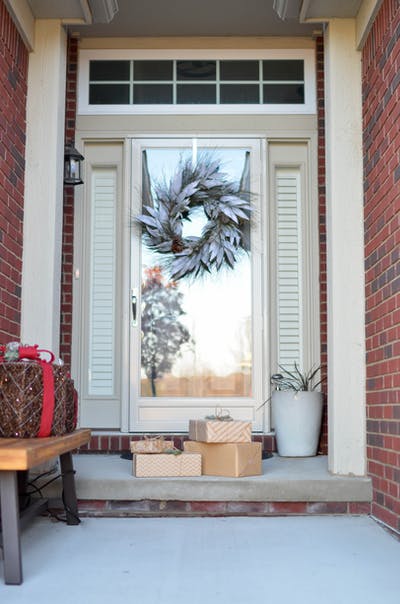
4. HANG SEASONAL WREATH

Wreaths are not just for Christmas or Easter, they work just as beautifully for fall and spring door décor, too.

Turn up the style by opting for a pair of wreaths for a symmetrical appearance. Symmetry in interior design is a technique used by designers to create a space that looks incredibly cohesive and tailored – and therefore welcoming and inviting.

Using architectural elements such as front doors is a good place to start, so give a front door a burst of color and intrigue with a fragrant and colorful wreath that is blooming with fresh foliage. Have fun playing about with scale and color but keep the overall effect simple and allow the natural beauty of the flowers to shine through.

  1. INTRODUCE SYMMETRICAL ELEMENTS 

The power of symmetry is so good that we had to mention it twice, and it is the best way to make your front door more attractive. A simple solution is to introduce a symmetrical pair of evergreen planters to your front décor ideas.

Clipped evergreens are perfect for creating a punctuation point in your planting scheme, for introducing low shapes to edge paths and to add definition to containers. Choose lollipop bay trees, smart box balls and pompom conifers to add strong shapes that help to define spaces. Topiary is also low-maintenance and looks good all year round.

‘I use topiary and evergreen plants and hedges as the backbone to my designs,’ says garden designer Richard Miers, whose work is known for using symmetry to create a sense of balance and proportion. ‘Using sculpted evergreens is a timelessly elegant way to provide focal points, frame key views and provide interest in spring.

  1. THINK ABOUT LIGHTING FOR STYLE AND SECURITY

Front door lighting isn’t just for turning your front yard walkway into a Christmas wonderland. It can be used year-round to create appealing effects. Lights positioned on either side of a front door are a useful security feature, especially if they react to movement and are combined with a camera.

A light by the door, either traditional or modern, is inviting to come home to in winter. You can also have lights that highlight the house, in the yard focused on planting or marking the gate/driveway. Dusk to dawn lights have sensors that allow them to turn on and off automatically

You can transform your front door into magical spaces with front yard lighting ideas. As dusk descends, carefully positioned outdoor lighting can play a central role, and they will create a sense of depth and space with the interplay of light and shadow.

  1. INTRODUCE SMART TECH

‘There are various hi-tech options for opening your front door while you sit in your car or from the office,’ says Elizabeth Assaf, co-founder and designer at Urban Front. ‘Keypad or fingerprint entry systems can be connected to your smart home system. Keypads allow you to use a card with an electronic strip, a fob or a simple number pad. These are usually connected to your smart home automation systems, to a motorized locking system, or Amazon’s Alexa(opens in new tab).

Fingerprint entry lets you to enter up to 100 fingerprints, which you can then add and remove from your smart phone. You can also open the door remotely using the phone app. Both these options require a power supply close to the door. Biometric software options allow iris, face or voice recognition entry system. Becoming popular in the US, they’re on the higher end of the cost scale.’

WHAT IS THE MOST POPULAR FRONT DOOR MATERIAL?

The most popular front door material will usually depend on the style, period and architecture of your home. Research your home’s style and add an appropriate front door.

A range of materials are used to make front doors. UPVC doors have the advantage of being low maintenance, and high-quality versions look good.

Timber doors have natural beauty, but will need appropriate care, which could be repainting, or wood treatment from time to time. Options include solid wood, and wood veneer finishes on a core of wood or other materials. The latter is a composite door, but you’ll also find composite doors made from GRP (glass reinforced plastic) with a wood-look, or painted wood-style finish, which you won’t need to redecorate, just clean from time to time.

Front doors can also be made from steel with a galvanized or painted finish. They’re very robust and look smart. Aluminum doors are light but strong, and can be cleaned with a mild detergent solution.

Remember I can help with anything Real Estate.  Ask me more about Curb Appeal.


Melissa Stevenson.com/309.256.0649

Keller Williams Revolution

Waiting for Closing…What Can You Do During That Time?

5 Things You Can Do While You Wait For Your Home to Finish Closing

Post Image
Credit: Rawpixel.com/Shutterstock

Homebuying involves a lot of “hurry up and wait” intervals, especially during the closing process. On average, it takes 49 days to close on a home. So, if you’re a first-time buyer, you’re probably curious what you can do during this lull while the transaction gets buttoned up — and before the tsunami of moving tasks hits.

Here, real estate experts share five things you can take care of before you get the keys to your new place (and one thing you definitely shouldn’t do).

Before you get ahead of yourself, proceed with some caution: About four in 100 home loans don’t make it to the closing finish line. For this reason, Los Angeles Realtor Angela Carassco recommends waiting until at least two thirds of your contingencies (things like the home inspection and appraisal contingencies) have been removed before you, say, enroll your kids in school or put down deposits on contract work.

Measure the windows.

If the sellers are open to it, you can request to have a visit with your architect or contractor so you can get a head start on work you have planned and begin getting some estimates, says Marie Bromberg, a licensed real estate salesperson with Compass in New York City. One thing to prioritize: Measure the windows for drapes or window treatments.

“There is nothing more uncomfortable than moving in, and then realizing you have no privacy in your new home.” Custom treatments may take weeks, so it’s good to get started on this right away, she says.

Schedule a walk-through.

Schedule a walk-through so you can have a final inspection of the home before the closing, says Bill Ryze, a certified chartered financial consultant and board advisor at Fiona, a financial services platform.

“Go around the house and see if repairs you had previously requested have been made,” Ryze says. “Check for any major changes in the property since you last visited.”

During this process, you’ll also want to test the appliances, hot water, and HVAC unit to make sure they work. If you find any issues, resolve them or negotiate a discount to cover the cost of the repairs needed, Ryze says.

Get your utilities set up.

A few days before closing, call the utility company and schedule for the utilities to be switched into your name on the day of closing, says Jordan Fulmer, owner of Momentum Property Solutions, a real estate investing company in Huntsville, Alabama. “If you forget to do this and the seller gets the utilities switched off, you’ll likely have to pay extra fees to have them turned back on,” he says.

Woman enters a code on the alarm keyboard at home
Credit: Getty Images/RossHelen

Have your home insurance policy scheduled.

Start getting quotes from different insurers and compare policies, Ryze says. Choose a provider and get coverage that begins on the day of closing the mortgage. If you are getting a loan on your house, your lender will verify you have property insurance in place. However, Fulmer says, if you are buying a house in cash, there probably won’t be anyone reminding you to complete this task.

Schedule movers.

Ideally, you’re able to schedule movers a month or two in advance. Your Realtor should be able to make a recommendation for a moving company. “Focus on purging your stuff so that you reduce the amount of items moved to what you really want in your next home,” says Chicago realtor Jennifer Riccolo DeBower with @Properties, a division of Christie’s International Real Estate. She also recommends gathering a “go bag” of must-have items that you can’t be without for the first couple of days after the move.

A final note: Don’t change your financial situation.

While it may be tempting to buy a bunch of new furniture for your home, don’t make any significant purchases with your credit card while waiting for closing. You also don’t want to take on new debt, like a car loan.

Lenders make decisions partly based on your debt-to-income ratio, or DTI, reminds Bill Gassett, a Massachusetts Realtor with Maximum Real Estate Exposure. If you make a large purchase, it could throw off your DTI and put your loan in jeopardy.

As always, I can help you with any of your Real Estate needs. Contact me at stevenson.csmdemo.com/ or 309.256.0649

Competing with All-Cash Offers

Here’s How a Seasoned Real Estate Investor Says You Can Compete with All-Cash Offers

byBARBARA BELLESI ZITOpublished APR 17, 2022


Image: Stockvault.net


Cash is king in real estate, which is bad news for many first-time home buyers trying to break into this super-competitive market. An all-cash offer — even when it’s lower than asking price is often more desirable to a seller because it cuts the lender out of the equation for a much faster closing.

Ryan David, the owner and lead investor at We Buy Houses in Pennsylvania, understands that investors with cash can be viewed as “unscrupulous” by some. Every industry has its scam artists, David says, but underhanded or low-ball offers for homes is not what his company is in the business of making. In fact, he says it’s credibility that’s really king.

“Credibility is so precious [in the real estate industry] that a cash offer is actually usually a very fair offer,” says David, who notes that any offer his company makes is based on careful market research and analysis of comparable property in the area.

David and his business partner also run a free local real estate club that meets monthly. They invite investors, real estate agents, and homebuyers to discuss the local real estate market and get answers to their questions about buying real estate. He makes it his business to help educate others about the homebuying process. Here’s what David advises you to do to make your home offer more competitive.

Offer more earnest money.

Earnest money is the cash a buyer provides when they make an offer on a home to show that they are, well, earnest about the purchase. Sometimes called a good faith deposit, it serves to protect the seller from losing money in case the buyer backs out of the deal and they must re-list the home.

Your earnest money should be around one to three percent of the purchase price, but David advises to put more down, if possible, to sweeten the deal. He suggests tacking on 10 percent more to whatever your deposit would have been; for example, if you were going to offer $5,000, offer $5,500.

“You’re only going to end up paying that money at closing anyway,” David says. “If you do it upfront, sometimes it can look like you’re more serious, and that can carry weight with [the seller].”

Credit: Nicole Morrison


Apply for a VA loan, if you qualify.

It’s not always necessary or even advisable to put 20 percent down on a home, especially when that much of a down payment would leave you strapped for cash should you need to make any repairs. But this is a fiercely competitive seller’s market, so coming in with a lower down payment might not bode well for you when there are all-cash offers on the table.

There is a solution, though, for buyers who qualify: VA loans. Homebuyers who are active military service members, veterans, or their survivors have a fighting chance against all-cash offers if they can score this type of loan, which is guaranteed by the Department of Veteran Affairs. This loan program requires no money down on a home and doesn’t require mortgage insurance, yet its secure backing can go a long way in assuring a seller that a home sale transaction will indeed happen.

Appeal to the seller.

This tip has its fair share of controversy, as fair housing advocates frown upon buyer’s “love letters” to sellers. Many people, including members of the National Association of Realtors, feel that it opens up buyers to discrimination if they mention religious affiliation, family status, sexual orientation, or any other personal information that falls under the protection of the Fair Housing Act. In fact, the state of Oregon attempted to outlaw such letters, but there is currently a block on that ban.

However, if you are inspired to put pen to paper and tell the seller why you’re best suited to be the next owner, David suggests focusing on a neutral topic that doesn’t pertain to money or any of your own personal details. For example, if the seller has a beautiful yard and you happen to have a green thumb, tell them how you’ll make it your mission to maintain that magnificent landscape. While a strong offer is paramount for many homeowners, knowing that their cherished home is in good hands for years to come could put your offer out front.

Patience is a virtue when it comes to buying a home. It’s hard to set your sights on a home only to have it snatched away by another buyer. Perhaps one of these tips will help you close the deal on a new home soon.


TAKE CONTROL OF HOUSEHOLD CLUTTER IN 8 FAST AND EFFECTIVE STEPS

You aren’t just a homeowner. You are a household manager! Running a household isn’t that different from running a business. Everything in your home is inventory.

Anything that comes through the door will have to be stored, organized, and maintained. So, the less that comes in, the less you have to “manage.”

If you keep this in mind, it may be easier to curtail the influx of new stuff. But you’ll still need to evaluate and manage the things already in your home to create a less chaotic existence and enjoy your home (and your life) even more.

You don’t need to become a minimalist to streamline your household. But, the more you can remove or eliminate what is already in your home, the easier your life will be.

With less inventory to manage, you’ll have more time for things you would rather be doing, like spending time with family and friends, pursuing a hobby, cooking a great meal, teaching a child to read, taking a walk, enjoying a movie, or anything beyond endlessly cleaning and tidying up your home.

Fortunately, there are several steps you can take that will make it easier to get your household inventory under control. It starts with recognizing the cost of doing nothing.

Step 1. Acknowledge the Negative Impact of Too Much “Stuff”

Too much “stuff” shuts everyone down. It’s a fact.

Studies have shown that cluttered and overwhelming environments encourage depression and anxiety and that women are even more impacted than men.

Cluttered homes can cause stress and elevate cortisol levels in women. In addition, a 2017 study of chaotic and disorganized environments concluded that clutter could lead to overconsumption of food. So yes, your clutter could be making you eat more and choose less healthy snacking options, all while stressing you out!

Chaotic environments are not healthy for children either. According to a scientific twin study, those living in clutter and chaos are less well-adjusted than children in calm, organized environments.

When faced with too many toys, children can become agitated and less likely to play with any of them. In contrast, it’s easier for children to employ their imagination and play happily with just a few toy options.

It’s easy to understand since a sense of being overwhelmed impacts adults too. For example, have you ever noticed that when your closet is stuffed with too many clothes, it seems that you never have anything to wear? But when you have just a few well-fitting, comfy favorites, you can dress quickly and feel good about how you look?

Similarly, too many options on a restaurant menu mean that it takes forever to place an order. But if there are only a few tasty alternatives, you can decide quickly and move on to enjoying the company sitting around the table with you.

Step 2. Employ the 80/20 Rule

The 80/20 rule, also known as the Pareto Principle, was developed in macroeconomics and has been successfully applied to many other areas like finance, science, and daily life.

When applied to your day-to-day life, the Pareto Principle states that you use 20 percent of your belongings 80 percent of the time. This is easiest to observe in your closet. Most people wear 20 percent of their clothes—their favorites—80 percent of the time.

The same is true of utensils and appliances in your kitchen and the tools in your garage. I’m sure you can think of many areas in your life where the Pareto Principle applies.

Step 3. Eliminate First

Eliminating the things you don’t use will make space for the things you do. However, just because something “might come in handy” later doesn’t mean it needs to take up room in your home.

There are thousands of things that “may come in handy,” but that doesn’t mean you are personally responsible for storing them, does it?

But how do you decide if an item is a keeper or something you should donate, sell, or toss? If you get stuck, employ this easy litmus test: if you can quickly replace the item for under a few dollars, it’s safe to discard it.

You probably won’t need the item, but it will be easy to re-acquire it if you do. In the meantime, the dozens (or possibly hundreds) of things that you’ll never need won’t take up valuable space and create visual clutter in your home.

Let the local store or the online retailer be your “storage unit” for whatever you may need at some point. Then, they can spend time managing and organizing that inventory space. You have better things to do with your time!

Unless you are incredibly organized, you may not be able to find those items later—and will probably end up replacing them anyway. That brings us to the topic of duplicates.

Step 4. Decline Duplicates

Lack of organization—and not having a dedicated place for each item—leads to duplicate items in your home. Traditional wisdom states that if you have one pen, you always know where it is, but you can never find one when you need it if you have a dozen. This is true of so many things.

Eliminating duplicates may seem counterintuitive, but establishing a dedicated place for a single item is far more effective than having spares scattered in multiple locations. Pick the highest quality and most enjoyable of your duplicates, and toss the others.

Removing unnecessary items in your home and ditching duplicates will make organizing your essentials much more manageable. If you can’t get through everything you need to evaluate, consider using the boxing method to identify your essential items and quickly eliminate the rest.

Step 5. Use the Boxing Method

You may be convinced that it’s time to eliminate the extra stuff in your life, but getting down to the 20 percent level can be difficult. Enter the boxing method. It’s an excellent way to make a big difference in your home in a short time without “minimizer’s remorse.”

The boxing method provides a built-in safety net that prevents you from eliminating something you do need while clearing your home quickly so you can experience the joy of a clutter-free home immediately.

To begin boxing:

  1. Enter a room and box up everything that’s not in that 20 percent “essentials” category.
  2. Label each box with the room name, plus the date, and find an isolated place to store it.
  3. Think “attic” or “basement” or another location that’s harder to reach.

Decision fatigue is real, and it sets in quickly. Boxing eliminates that problem. It’s easy to isolate what you know you use routinely and box up the rest. But, on the other hand, it’s much harder to handle each object and determine if it’s a “keeper” or something to eliminate permanently.

Step 6. Proceed Section by Section, or Room by Room

Empty all your cabinets, drawers, and closets in one room or one area. Start with any space that’s bothering you. You can do one drawer at a time or pull everything out and create a pile in the middle of the floor.

Either way, plan to keep only those items you regularly use (think daily or weekly). Box up the rest. Move the box to storage with a label that defines the room it came from and the date you stored it.

Once finished, you will be able to enjoy the experience of living in a home clear of clutter in a fraction of the time required by other clutter-busting methods.

Step 7. Organize What’s Left

Focus on the 20 percent that remains in your home—the things you use most often. These essentials need to be given a “home” where they are easy to access and, even more importantly, where they are easy to put away.

Every item needs a designated place.  Otherwise, you will probably find yourself spending too much time “hunting” for things. What could be a bigger waste of time?

Something as simple as a hook on the wall for keys near the entry of your home prevents morning scrambles before leaving for work.

If your keys are always placed on the hook (or in another dedicated space) upon entering your home, you don’t have to rummage through your bag, check the pockets of the clothes you wore yesterday, search all the flat surfaces in your house, and toss the couch cushions to see if they fell between.

“A place for everything and everything in its place” should be your mantra for your essentials.

Step 8. Retrieve What You Need

If you need something that you boxed up over the next six months, retrieve it. You may have to dig around in a few boxes, but it probably won’t take any longer than finding it before you boxed it up.

Don’t remove anything except the one item you were seeking, and only retrieve needed items or something you deeply miss. The rest stays in the boxes.

After doing this for 6-12 months, you can eliminate the boxes. Yes, that’s right. Eliminate them. Don’t even open them up. You haven’t needed or missed the contents for many months (maybe a year or more), and you don’t need to go through them and “decide” on anything.

This method may seem abrupt, but it’s an excellent way to eliminate decision fatigue, avoid procrastination, and pare down your “stuff” to what you truly love and need. Boxing makes decluttering automatic and painless—as long as you don’t open the boxes up before removing them.

A decluttered home makes it easier to achieve organization, which is good for your mental and physical health as well as your enjoyment of your home!

Spring Yard Clean Up

5 STEPS FOR TACKLING SPRING YARD CLEANUP AND GEARING UP FOR SUMMER

Temperatures are inching up! With winter weather in the rearview mirror, it’s time to roll up your sleeves and get a head start on yard projects. Follow these five critical steps in anticipation of enjoying more time outdoors!

Step 1. Deal with Debris

Even if you did a comprehensive fall clean-up, months of winter weather could leave the neatest of yards appearing untidy in the spring. Here are the first items to check off your list!

__ Collect dead leaves that have accumulated along the edges of walls and fences, in corners, and under bushes.

__ Pick up fallen branches and twigs. If you have pines, walnuts, sweet gums, sycamores, or other seed-bearing trees, you may need to collect and discard these too.

__ Grab any litter. Stray plastic bags or other debris may have magically dropped or blown into your yard.

__ If you have a dog and didn’t pick up their droppings in the yard over the winter, it’s time to catch up!

Step 2. Thin and Trim

In addition to collecting loose debris on the ground, early spring is the best time to clear out other undesirable plant materials.

__ Remove dead stalks from perennials and ornamental grasses to make way for a new, fresh season of growth.

__ Prune your shrubs and bushes to maintain a neat appearance. Go ahead and remove any dead or damaged branches, but hold           off on pruning back spring-flowering shrubs until they’ve bloomed.

__ Rake your lawn with a leaf rake to help control thatch build-up.

__ Consider hiring an arborist to evaluate larger trees. An arborist can help you preserve these living assets by recommending how and when to prune, depending on the species.

Step 3. Set the Stage for the Season

Your yard will look its best from spring through fall if you take steps now to help ensure you get your desired results.

__ Fertilize your lawn. Many products, including traditional fertilizers and organic options, can help your grass grow lush and healthy.

__ Compost is an excellent alternative to fertilizer when lightly dispersed across your lawn. You can also spread compost more thickly on flower beds, vegetable gardens, or as a mulch around tree trunks.

__ Check the edges where your lawn meets planting beds or mulched areas under trees. Spring is the perfect time to reposition any edging materials that moved out of place or install new edging.

__ Prep your containers. Take inventory of the containers you already own and what you’ll need to grow a beautiful decorative container garden collection or for fruits and vegetables.

Step 4. Clean and Crisp!

It’s easy for dirt to accumulate over the winter months. So take advantage of comfortable spring temperatures to prep your yard and gear up for summer activities.

__ Uncover your patio furniture or bring it out of storage. Give everything a good scrubbing and wash or replace any worn cushions.

__ Wash windows, so they sparkle and allow more light to enter your home. If you have screens, clean them too!

__ Scrub outdoor surfaces. Driveways, sidewalks, decks, and patios can benefit from a spring cleaning. Power washers can make these tasks faster and improve your results.

__ Clean the exterior walls and gutters too. If you’re using a power washer, adjust the setting for your home’s siding material (lighter pressure for wood; heavier for brick).

Step 5. Pick Your Projects

Spring is a perfect time to plan summer yard projects. First, inspect your home’s exterior to see what needs attention and consider features you’d like to add.

__ Home maintenance. Repair any damage to siding, soffits, and gutters. Extend the life of your driveway or tackle painting projects, including your front door.

__ Gardens and landscaping. How would you like to enhance your yard? Plan now to add features like a new fence, raised garden beds, a trellis, a rain barrel, or new shrubs and trees.

__ Outdoor entertaining. Prepare for summer fun by tackling a new DIY patio, building a deck, or keeping your current deck looking its best. Also, consider adding outdoor lighting in anticipation of warm summer nights.

__ Major renovations. Spring is also an excellent time to plan for significant exterior home renovation projects, like adding a new roof or replacing your garage door or windows. Again, talk to contractors early, so you can make the best selection and get a spot on their schedule.